Practical local guide
Whale watching in Hervey Bay with kids
A parent-focused guide to choosing a Hervey Bay whale-watching trip by age rules, duration, vessel facilities and current operator information.
Updated 28 July 2026 · 10 min read
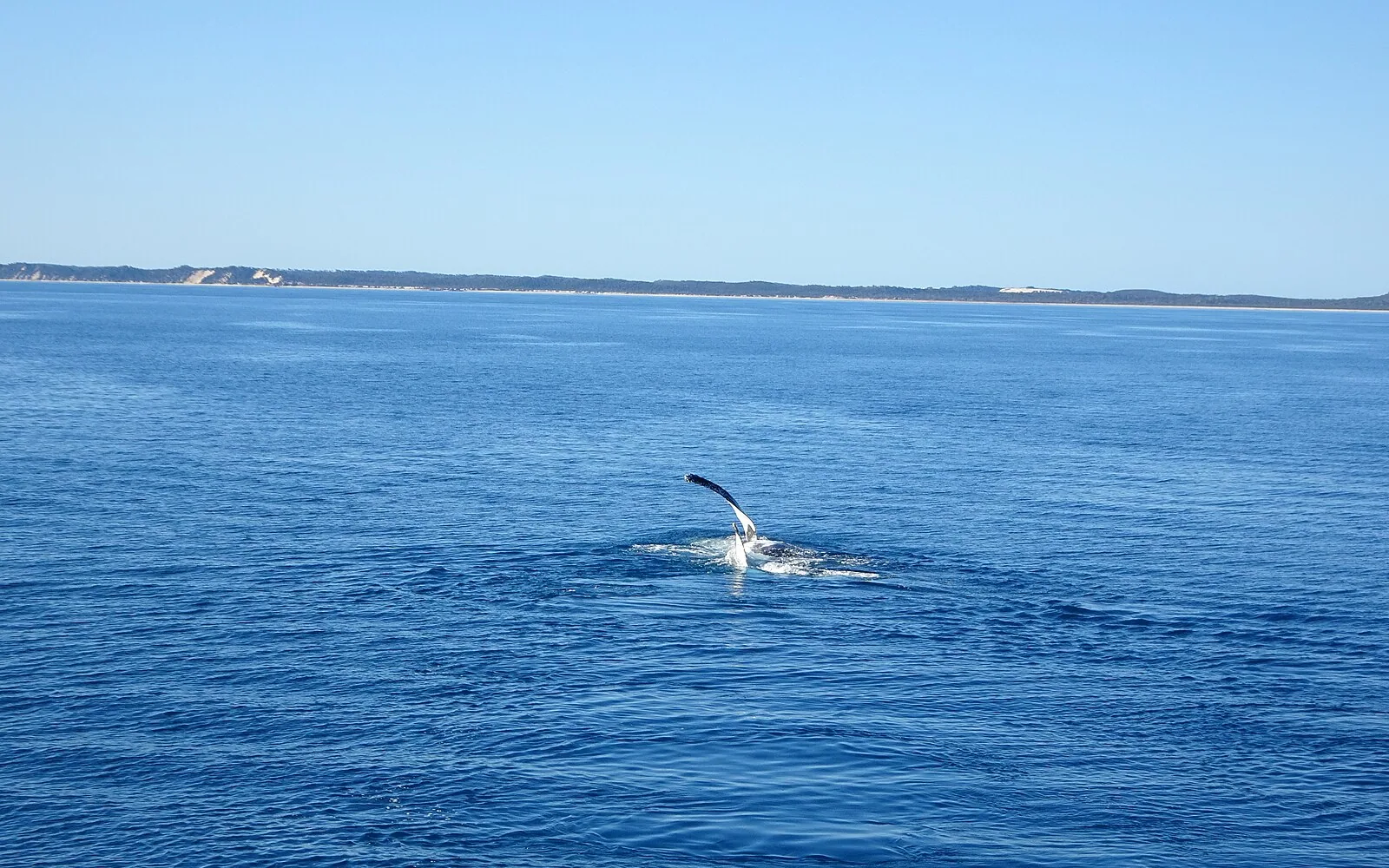
Hervey Bay’s whale season is a strong family experience when the trip matches the child and the vessel. “Whale watching” can mean a shorter cruise, a half-day trip or a longer day that combines wildlife and K’gari. Boarding, shade, toilets, food, viewing areas and minimum ages vary.
Visit Fraser Coast’s current 2026 information describes the typical Hervey Bay season as mid-July to late October. The tourism body explains that humpback whales use the Hervey Bay and Platypus Bay area as a stopover during migration.
That regional season is not an operator timetable. Check the chosen operator’s current dates and departure time.
Start with the child, then compare the boat
Before looking at price, write down:
- the youngest passenger’s exact age;
- comfortable total time away;
- need for a pram or carrier;
- toilet and change requirements;
- shade and indoor-space needs;
- food and drink requirements;
- boarding or mobility needs; and
- how the family usually handles boat motion.
Then ask each operator the same questions. A fair comparison uses current published facts, not review ratings.
Babies and toddlers
Do not infer that babies are accepted because an operator sells a “family” fare. Ask directly:
- is there a minimum age?
- must an adult hold the baby during boarding?
- can a pram be taken and where is it stored?
- is there an indoor or shaded area?
- what toilet/change facilities are on board?
- can bottles and food be brought?
- what is the full gate-to-gate duration?
- what happens if conditions change?
A larger vessel may publish different access facilities from a smaller boat, but size alone does not prove suitability.
Keep the day simple. Adding an early drive, a long cruise and a late restaurant booking can turn a workable boat trip into an overly long day.
Primary-age children
Primary-age children often benefit from knowing what the day looks like:
- arrive and check in;
- board at the marina;
- travel through the Great Sandy Strait towards the whale-watching area;
- wait and watch for wildlife;
- return to Hervey Bay.
Wildlife does not follow a timetable. Bring a quiet non-screen fallback that works on a moving vessel and cannot blow overboard.
Ask whether the operator provides commentary or activity material, but do not assume every cruise has a children’s program.
Tweens and teens
Tweens and teens may care more about:
- open-deck viewing access;
- photography;
- trip length;
- mobile reception expectations;
- marine-life interpretation;
- food; and
- whether the trip combines another activity.
Let them compare two current operator fact sheets. The things to do for teens guide provides a fallback if the weather or cruise schedule changes.
Half-day versus full-day
Use the operator’s published duration, not the label alone.
| Check | Shorter or half-day trip | Longer or full-day trip |
|---|---|---|
| Total duration | Confirm check-in and return time | Confirm the complete itinerary |
| Food | May be light refreshments only | May include more; check dietary process |
| Rest options | Check indoor seating and shade | Check where breaks occur |
| Extra destinations | Usually focused on whale watching | May combine K’gari or remote coast |
| Young children | Shorter can be simpler | Longer may be too much for some families |
| Teens | Focused wildlife experience | Extra activity may appeal, subject to age rules |
Neither column is automatically better.
Vessel facts worth comparing
Ask or verify:
- passenger capacity;
- number and position of viewing decks;
- indoor seating;
- shade;
- toilet type;
- pram and wheelchair access;
- food and drinks;
- smoking policy;
- boarding method;
- departure marina;
- duration; and
- cancellation and sighting-guarantee terms.
Accessibility language must come from the operator. One Visit Fraser Coast product page, for example, describes Quick Cat II as having wheelchair and pram access. That claim belongs to that vessel only and should be confirmed for the intended date.
Motion and seasickness planning
This site does not provide medical advice. If someone is prone to motion sickness, seek advice from an appropriate pharmacist or health professional before the trip and follow the operator’s instructions.
Practical non-medical checks include:
- where the vessel travels;
- whether passengers can sit outside or inside;
- food and water arrangements;
- operator cancellation policy; and
- what to bring if a child feels unwell.
Do not promise “calm water”. Conditions vary.
Clothing and equipment
Check the operator’s list. A practical starting point can include:
- warm layer even on a sunny day;
- sun protection;
- secure footwear;
- water;
- camera strap;
- compact child essentials; and
- any medication advised for that passenger.
Avoid loose items that can blow from an open deck.
Price comparison
Family tickets, child ages and infant fares vary. A price is not comparable until you know:
- which ages count as child or infant;
- number of adults and children included;
- booking fees;
- food inclusions;
- trip duration;
- guarantee or rebooking terms; and
- cancellation conditions.
Every price should carry a checked month and year. If the operator does not publish a price, the directory says to contact the operator rather than guessing.
Booking checklist
Before paying:
- open the operator’s own current page;
- confirm the operating date and departure time;
- confirm every child’s age category;
- ask about prams, restraints or access needs;
- check duration, toilets, shade and food;
- read cancellation and guarantee wording;
- confirm the marina and arrival time; and
- keep a weather-proof fallback.
Compare the wider whale-watching trip
This page remains the age-and-family planning layer. For the complete season, operator and trip comparison, continue to Visit HB’s Hervey Bay whale-watching guide.
Frequently asked questions
Which operator is best for children?
This site does not publish an unsourced “best” ranking. Compare the child’s age with the operator’s current duration, facilities, boarding, access, food and terms.
Can we take a pram?
Some vessels publish pram access, but this is vessel-specific. Confirm storage and boarding with the operator.
What if the child gets bored?
Choose a duration the child can manage, explain the waiting part and carry a secure quiet activity. Wildlife timing is not guaranteed.
Are whale swims suitable for children?
Age, swimming ability and conditions are operator-specific. Use the licensed operator’s current rules and never infer eligibility from a general whale-watching age.
Sources checked July 2026: Visit Fraser Coast whale-watching hub, 2026 season explainer and current operator product pages. Operator-specific age, access, price and guarantee terms must be checked directly before booking.